Featured

Reflection on my PgCert Journey

The beginning…

It would be spiteful, to put a jellyfish in a trifle

— Karl Pilkington.

This is the first post on my new blog. I’m just using it to reflect on what I have learned from having completed my first week of online study.

The first few activities have reminded me of some of the learning theories that I studied at Levels 3 and 5 before undertaking this course. I have been reminded of the principles of active learning and what this looks like.

It was also beneficial to be introduced to Transformative Learning and the Coventry Strategy including the 6 pillars.

An excercise I found particularly useful was the chance to write about my own teaching philosophy. This was beneficial from the perspective of clarifying my own priorities as a teacher and considering how these interact as they relate to my practice.

Initial Peer Review – Dialogue

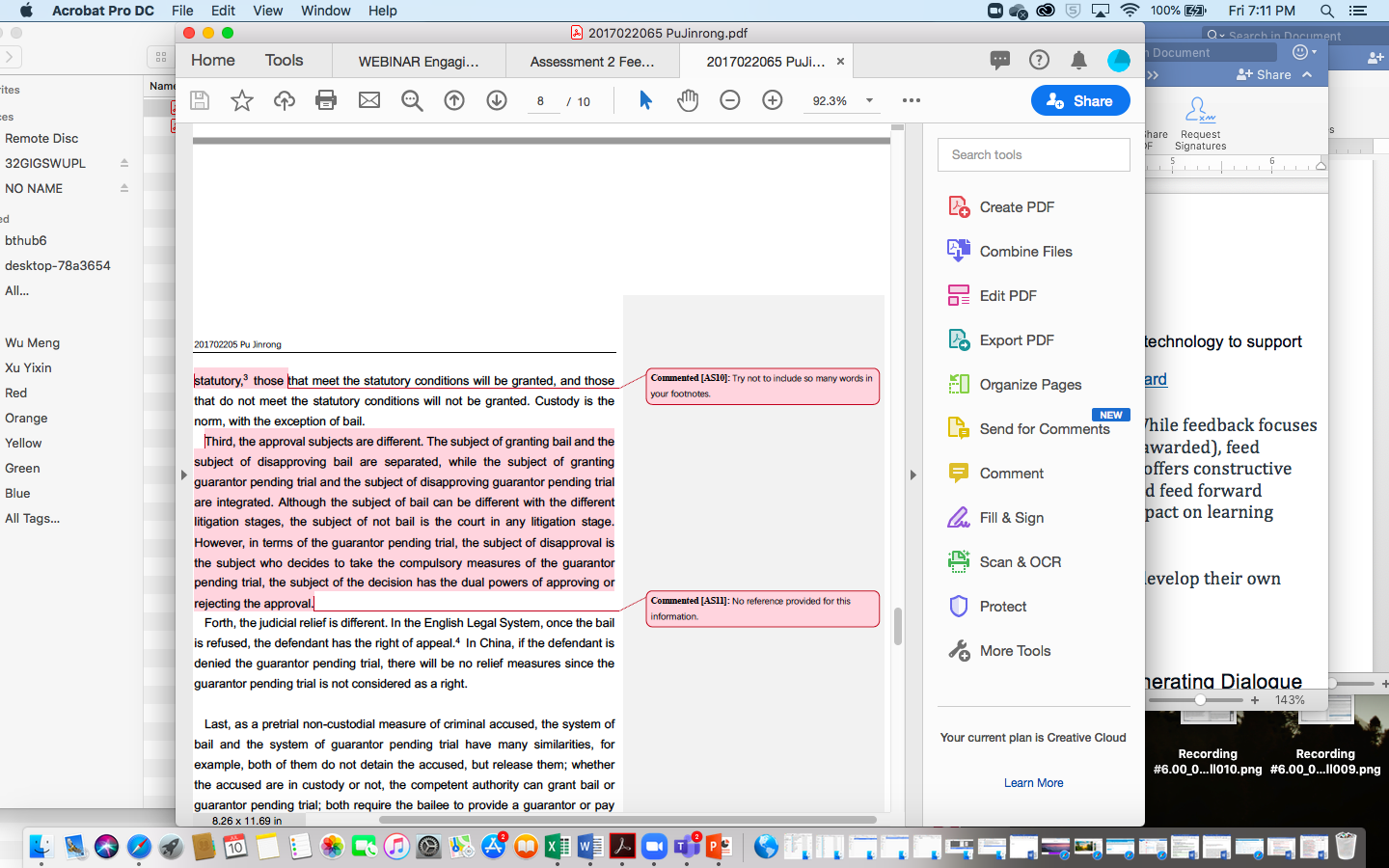
“You asked about levels of acceptable “copying and pasting from the internet without attribution”. Any act of using others’ material without attribution is plagiarism. Don’t think about ‘how much’ is acceptable, but think about why it has happened. Here are some questions to consider:

  • Have you given the students sufficient training around attribution practices? (In-text citations, end references, paraphrasing, direct quotation, building arguments around evidence…?)
  • Have students been asked to sign a declaration of originality, and have you checked they understand what this declaration means?
  • Are there indicators of malicious intent to deceive (paraphrasing sources to cover tracks on Turnitin, file properties suggesting multiple authors, references to texts/websites from well outside the scope of a module’s reading or normally accessible resources) or positive attempts to cite, used clumsily (end references, but no in-text citations, or citations placed at end of paragraphs, without clear attachment to the right sentences).

That’s a starting point, but apologies, I feel like this is the kind of thing that needs a bit more of a conversation. Let me know if you’d like me to come over and chat some time, or arrange something online.”

A Reflection on another CPD event…

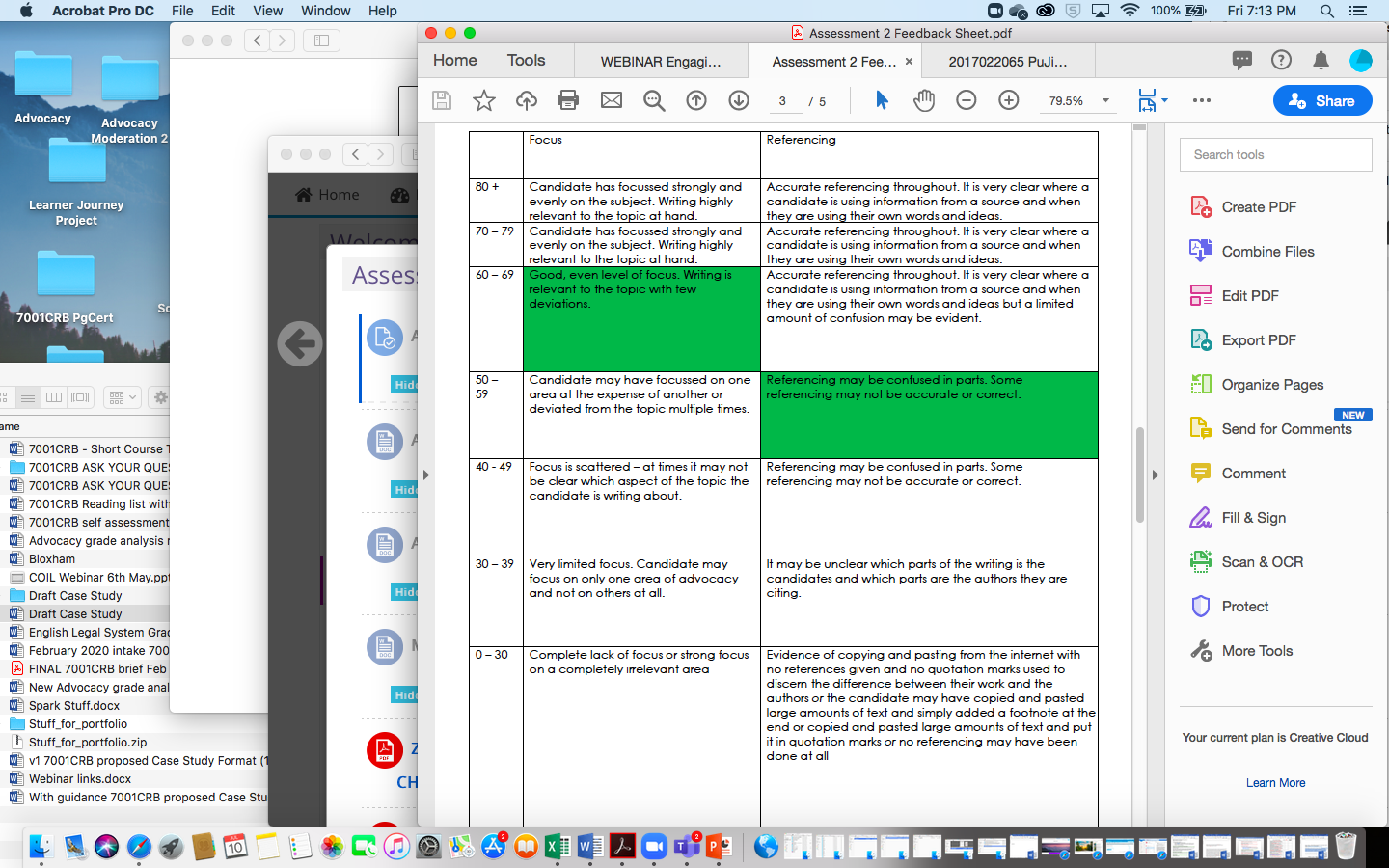
On the 17th of June I participated in another CPD event. This one was about harnessing micro-learning opportunities and involved a discussion of how to create smaller learning opportunities for learners and also the introduction of ‘mini’ rubrics which I thought was quite a good idea. This would be particularly good for my Chinese students – I expect it would help them with their understanding of the Assessment Brief and associated criteria. Breaking down the expectations of learners into small chunks which can easily be digested seems like a great idea. In the meeting I shared a couple of examples of micro-learning opportunities with the group which I developed myself with assistance from others at the Law School. They consisted of two short videos on legal Advocacy – one demonstrating how to perform Advocacy and another demonstrating how not to perform Advocacy. They are both used as part of the students ‘asynchronous’ learning on our course under the 4-2-4 model of teaching to strong effect. Over a quarter of students wrote in their reflective writing following their practical advocacy assessment that they used the example video on good advocacy to help them in their work which has since highlighted to me the value of micro-learning opportunities.

Micro Learning Opportunity – Example of Good Advocacy
Example of Bad Advocacy

Learners were required to then use the assessment criteria to mark the two advocates based on how good job they thought they had done – this moved the experience away form a purely passive exercise.

A Reflection on A CPD Event

On the 6th of May 2020 I attended a CPD event booked through the ACDEV unit relating to COIL projects. This seemed like a very good session to attend given that we were considering one such project under the Sino-UK Joint Program before the Coronavirus Lockdown happened. Since then there has not been much development of this idea but this still seemed like a good thing to learn more about. One particularly interesting dimension to this project was the material on International Learning Outcomes and the creation of learning activities to achieve such outcomes. This is something that links well with the program in general as we are creating learning activities for ‘international students’. One idea that occurred to me was that we could possibly try and host an international mooting event – possibly the first of it’s kind- whereby a student in Coventry could moot via a video conferencing platform with a student in China. This would involve both synchronous and asynchronous learning to be facilitated. Although field trips and as such are not going to be possible for the foreseeable future we will be looking together to technology to bridge this gap in a way and try and allow our students to experience life at Coventry via a virtual platform.

Design a site like this with WordPress.com
Get started